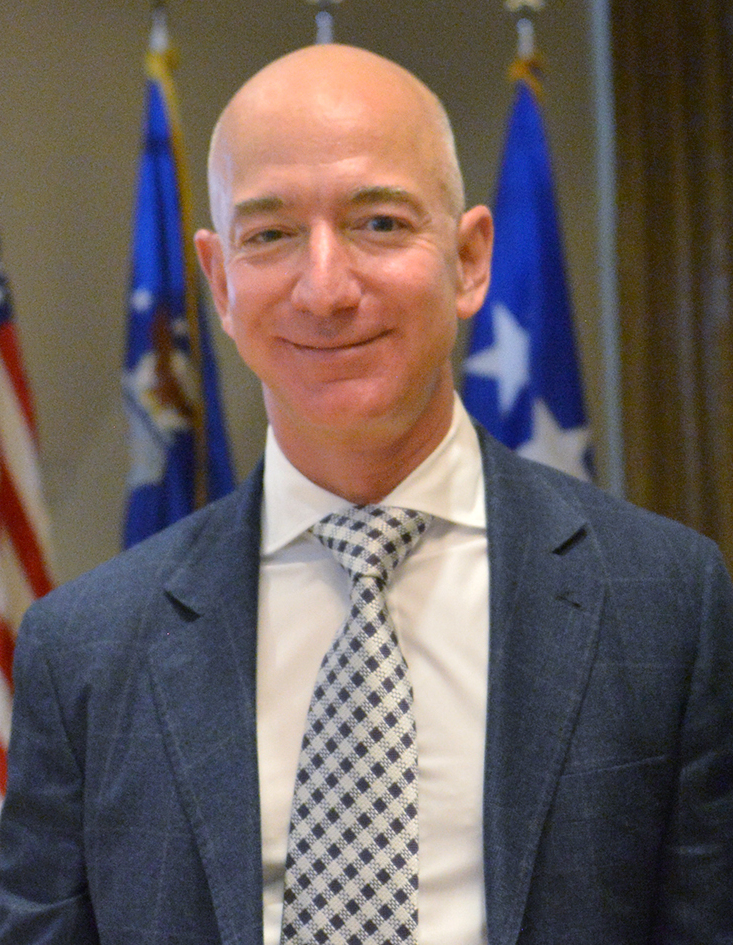
Jeff Bezos Net Worth: Journey from Bookseller to $158 Billion
Jeff Bezos, a name synonymous with innovation, disruption, and immense wealth, stands as one of the most compelling figures in modern business history. His journey from a humble hedge fund employee to the founder of Amazon, an e-commerce behemoth that reshaped retail, is a testament to his vision, tenacity, and relentless pursuit of customer satisfaction. Today, with a staggering net worth of $158 billion, Bezos is a perennial fixture on the list of the world's richest individuals, his empire extending far beyond online sales into space exploration, media, and vast real estate holdings. This article delves into the remarkable life and career of the man who dared to dream big, starting with books and ultimately creating an "everything store."
The Genesis of an Empire: From Hedge Fund to Amazon's Birth
Before he became a household name, Jeff Bezos was a well-regarded computer scientist working on Wall Street. His career began in earnest at Fitel, a startup, followed by D.E. Shaw & Co., a quantitative hedge fund in New York. By 1994, at the age of 30, Bezos had become a senior vice president at D.E. Shaw, enjoying a lucrative and stable career. However, the nascent internet, growing at an astonishing 2,300% per year, ignited a spark of entrepreneurial ambition within him. He saw an unprecedented opportunity.
Bezos meticulously researched various products that could be sold online, eventually concluding that books were the ideal starting point due to their universal demand and relative ease of distribution. In what would become a legendary decision, he left his comfortable job and embarked on a cross-country road trip from New York to Seattle, writing Amazon's business plan on the way. Setting up shop in his garage, Bezos, alongside a small team, launched Amazon.com in July 1995.
The initial years were challenging. Amazon struggled to turn a profit, requiring substantial reinvestment and faith from its early investors. Critics were plentiful, doubting the long-term viability of an online bookseller against established brick-and-mortar giants. Yet, Bezos's long-term vision and unwavering focus on the customer experience laid the groundwork for future success. He understood that the internet offered a boundless storefront, a place where choice and convenience would ultimately triumph. His courage to leave a high-paying, secure position for an unproven venture in a rapidly evolving technological landscape underscores a crucial entrepreneurial lesson: true innovation often requires stepping far outside one's comfort zone and embracing calculated risks.
Beyond Books: Expanding the Amazonian Universe and Accumulating Wealth
The initial success of selling books online quickly gave way to a much grander ambition: to make Amazon "the world's largest store." Bezos began diversifying Amazon's offerings, moving into music, videos, electronics, and eventually, virtually every product imaginable. This relentless expansion was driven by a customer-centric philosophy and a willingness to experiment, even if it meant initial losses. Key milestones like the introduction of Amazon Prime in 2005, which revolutionized online shopping with expedited shipping and digital content, solidified Amazon's market dominance.
Amazon Web Services (AWS), launched in 2006, proved to be another game-changer, providing cloud computing services that would become the backbone for countless businesses worldwide. AWS grew into a multi-billion-dollar enterprise, contributing significantly to Amazon's profitability and, by extension, Jeff Bezos's net worth. The company's innovative culture, often characterized by Bezos's "Day 1" philosophy – a mindset of perpetual urgency, innovation, and customer obsession – propelled Amazon from an online bookseller into an e-commerce giant, a logistics powerhouse, and a leader in cloud technology.
Despite its phenomenal success, Amazon and Bezos have faced their share of scrutiny, including antitrust investigations and debates over labor practices. However, the company's growth trajectory remained largely unhindered. By focusing on scalability, efficiency, and constantly expanding its ecosystem, Amazon not only reshaped the retail landscape but also created unprecedented wealth for its founder. As of recent reports, Jeff Bezos stands as the third-richest person globally with a net worth of $158 billion, a figure that largely reflects his substantial stake in Amazon. His journey underscores the immense power of innovation coupled with strategic diversification in creating and sustaining vast wealth.
The Billionaire Life: Space, Real Estate, and Philanthropy
With immense wealth comes the ability to pursue passions and make significant investments outside the primary business. Jeff Bezos's interests extend well beyond Amazon, most notably into space exploration through his company, Blue Origin. Founded in 2000, Blue Origin aims to make space accessible for humanity, developing reusable rocket technology and offering suborbital space tourism. Bezos himself took a historic flight to the edge of space aboard Blue Origin's New Shepard rocket in 2021, embodying his childhood fascination with the cosmos. This venture is not merely a hobby; it represents a long-term investment in humanity's future and a testament to his expansive vision. To learn more about his ventures beyond Amazon, check out
The Billionaire Life: Jeff Bezos's Empire, Space, and Real Estate.
Bezos's personal purchases also reflect his extraordinary wealth. He is reportedly the 24th-largest landowner in the United States, possessing an astounding 420,000 acres. This includes sprawling mansions in Hawaii, California, Florida, and other prime locations. One of his most notable recent acquisitions is "Koru," a magnificent 417-foot superyacht, estimated to have cost around $500 million.
Bezos's early life offers glimpses into the intellect and drive that would define his future. Born on January 12, 1964, to a teenage mother, Jackie, he was later adopted by her Cuban immigrant husband, Miguel Bezos, who Jeff affectionately calls Mike. Jeff didn't learn about his biological father until he was 10, a revelation he later downplayed, more concerned about the implications of the news for his family than the news itself. From a young age, Bezos showed signs of brilliance; an anecdote from "The Everything Store" recalls him taking apart his crib with a screwdriver because he wanted to sleep in a real bed. He spent summers from ages four to sixteen on his grandparents' ranch in Texas, engaging in practical tasks like repairing windmills and castrating bulls – experiences that fostered a hands-on problem-solving approach. Decades later, a portion of this ranch land would become the launch site for Blue Origin rockets, tying his childhood to his grandest adult ambitions.
His first job was cooking burgers at a McDonald's in Miami, an experience he described as "really hard" in a 2001 interview with Fast Company, where he was relegated to the back for being an "acned-teenager." His grandfather, Preston Gise, remained a significant inspiration, influencing Bezos's belief that "it's harder to be kind than clever." This foundational wisdom, combined with a relentless work ethic and curiosity, paved his path to billions. For a deeper dive into his career journey, read
From McDonald's to Amazon: Jeff Bezos's Path to Billions.
Lessons from the Journey: Bezos's Entrepreneurial Mindset
Jeff Bezos's journey offers invaluable insights for aspiring entrepreneurs and business leaders. His meteoric rise can be attributed to several core principles that underpinned his decisions and shaped Amazon's culture:
*
Long-Term Thinking: Bezos consistently prioritized long-term growth and customer value over short-term profits, a strategy that allowed Amazon to invest heavily in infrastructure, technology, and new ventures. This foresight, often criticized initially, proved to be Amazon's greatest strength.
*
Customer Obsession: More than just "customer focus," Bezos instilled a deep "customer obsession" within Amazon. Every decision, from product development to logistics, was viewed through the lens of how it would benefit the customer. This unwavering focus created unparalleled loyalty and drove continuous improvement.
*
Willingness to Experiment and Embrace Failure: Amazon famously conducts thousands of experiments each year, understanding that many will fail. Bezos views failure as an essential part of innovation, a learning opportunity that fuels future success. This culture of experimentation allows for bold moves and rapid adaptation.
*
"Day 1" Mentality: Bezos articulated the "Day 1" philosophy to counter organizational complacency. It's a reminder to always approach business with the same energy, innovation, and customer focus as if it were the company's first day. This mindset fosters agility and prevents stagnation.
*
Calculated Risk-Taking: Leaving a stable, high-paying job for an unproven internet venture was a significant risk, but it was calculated. Bezos saw the potential, understood the trends, and was willing to bet big on his vision.
Aspiring entrepreneurs can learn from these principles by fostering a similar mindset. Instead of fearing failure, view it as a stepping stone. Prioritize your customers above all else, and always look for ways to innovate and stay ahead, maintaining the fresh perspective of a startup, regardless of your company's size.
Conclusion
Jeff Bezos's journey from an online bookseller operating out of a garage to one of the wealthiest individuals in the world is a modern-day epic of entrepreneurship. His $158 billion net worth is a reflection of Amazon's colossal impact on global commerce, technology, and even space exploration. Beyond the staggering figures, Bezos's legacy is defined by his visionary leadership, his unyielding customer obsession, and his relentless pursuit of innovation. He proved that with audacious goals, a long-term perspective, and a willingness to embrace change, a single idea can indeed grow into an empire that reshapes industries and leaves an indelible mark on the world.